
Sending music, and knowing it landed
Practical guides on delivering demos privately and seeing who actually listened.
 Product news
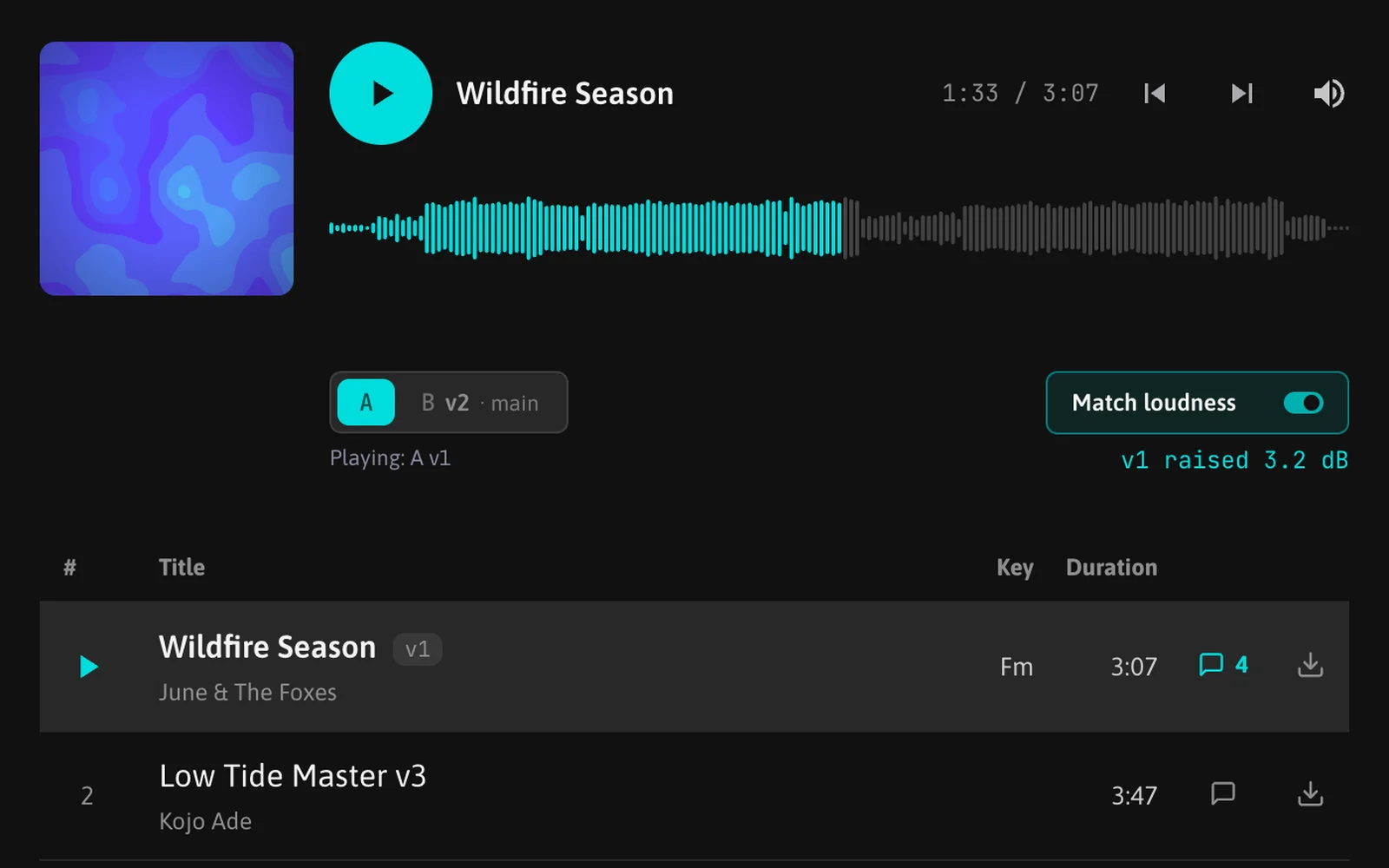
What's New in trakk'em: Track Versions and A/B Comparison
Every mix and master of a track in one place, with the same links, and A/B buttons for your listeners. Plus light themes, keyboard shortcuts and search in Tracks.
Read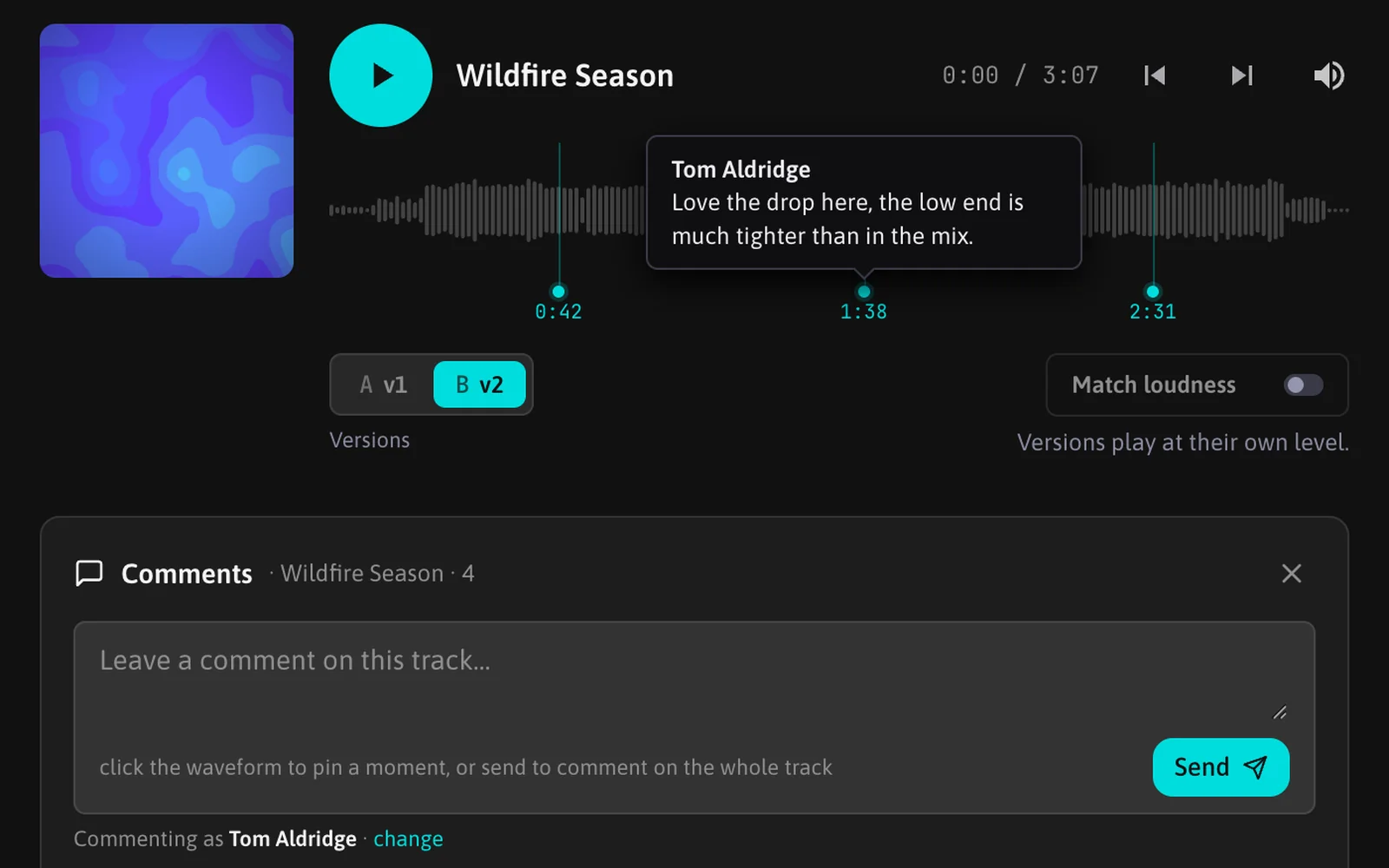 Product news
What's New in trakk'em: Timestamped Comments, Website Embed and Upload Area
Listeners can comment on the exact second of a track, and you reply from the track page. Plus the website embed, the upload area and a user manual.
Read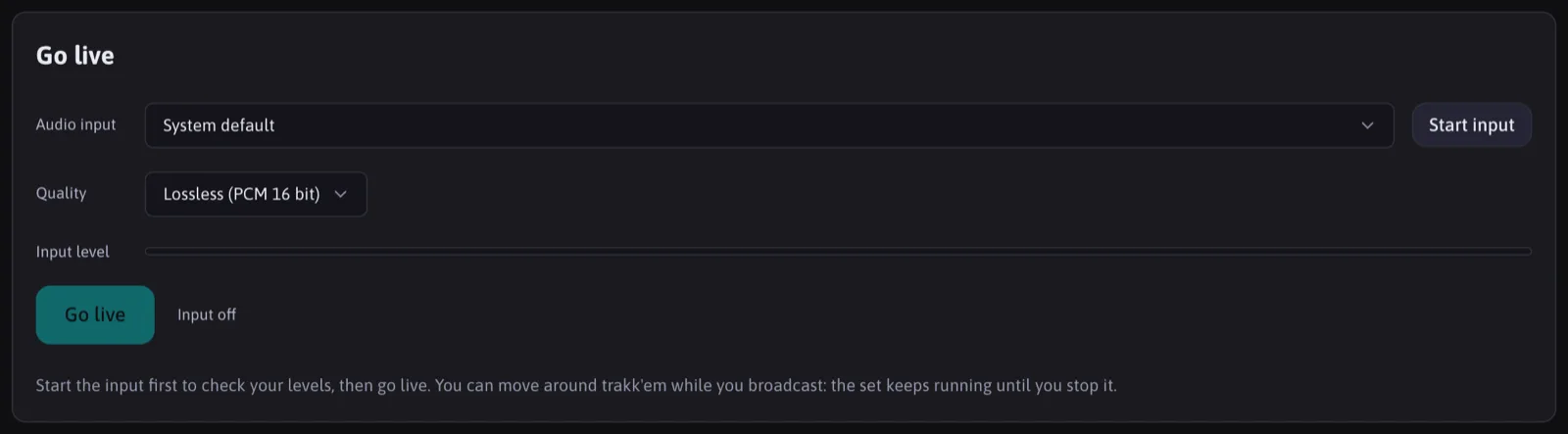 Streaming
How to Stream Music Reviews on Twitch Without Copyright Strikes (Split Audio Setup)
Voice on Twitch, music on a second link everyone opens. No music in the VOD, nothing for audio detection or Content ID to match, and your viewers hear it in lossless.
Read Streaming
trakk'em vs SonoBus: Playing Together vs Being Listened To
SonoBus is a rehearsal room over the internet. trakk'em is a private radio station with a guest list. Same lossless audio, different jobs.
Read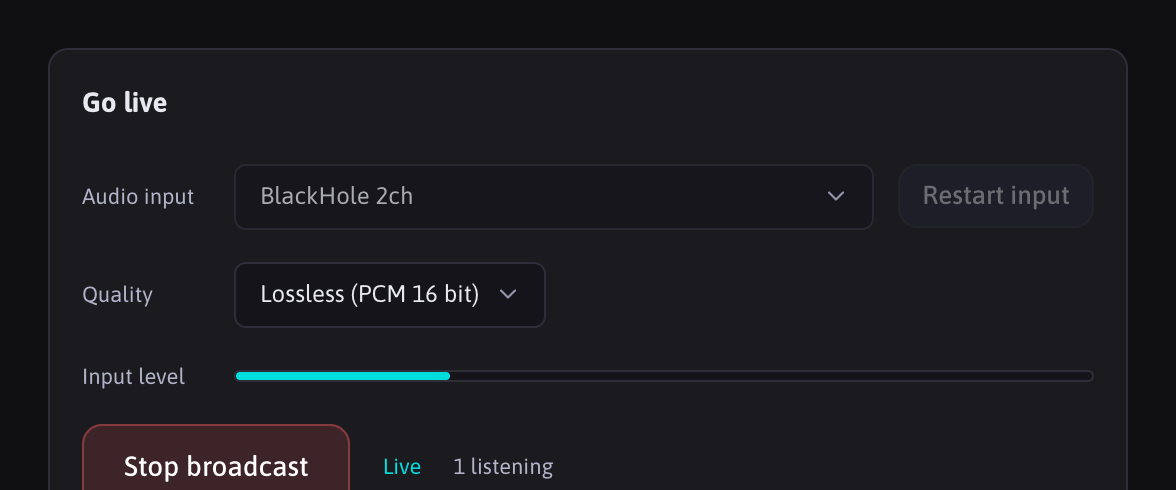 Streaming
How to Stream Audio from Any App to Your Browser (Mac and Windows)
A browser only knows microphones. A free virtual cable turns any app into one: BlackHole on Mac, VB-Cable on Windows, five minutes, and your master bus streams live to a link.
Read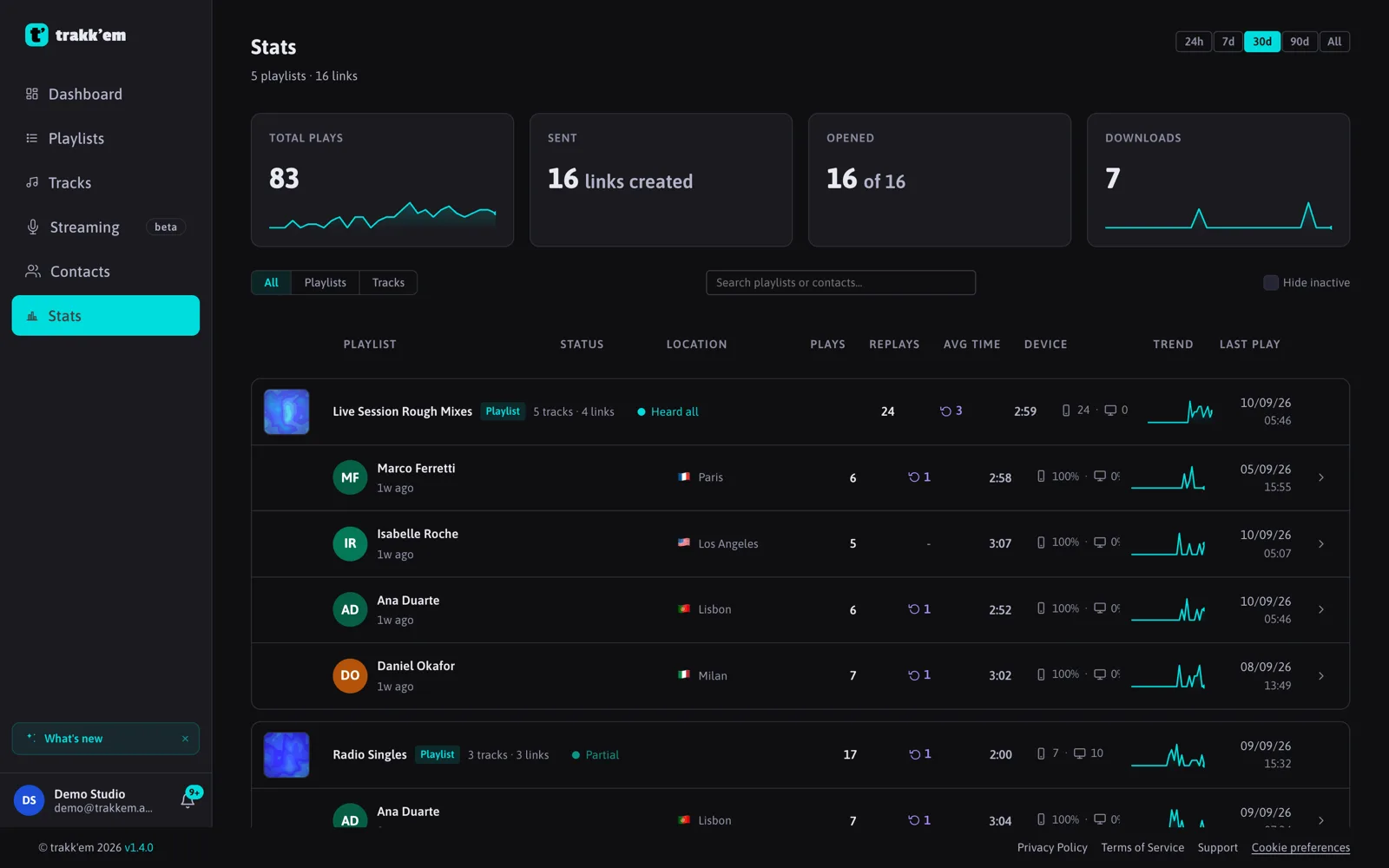 Sending music
How Many Labels Should You Send Your Demo To?
Not one, not a hundred: 5 to 10 per wave. And the part nobody manages properly: actually knowing who opened, who listened, who passed.
Read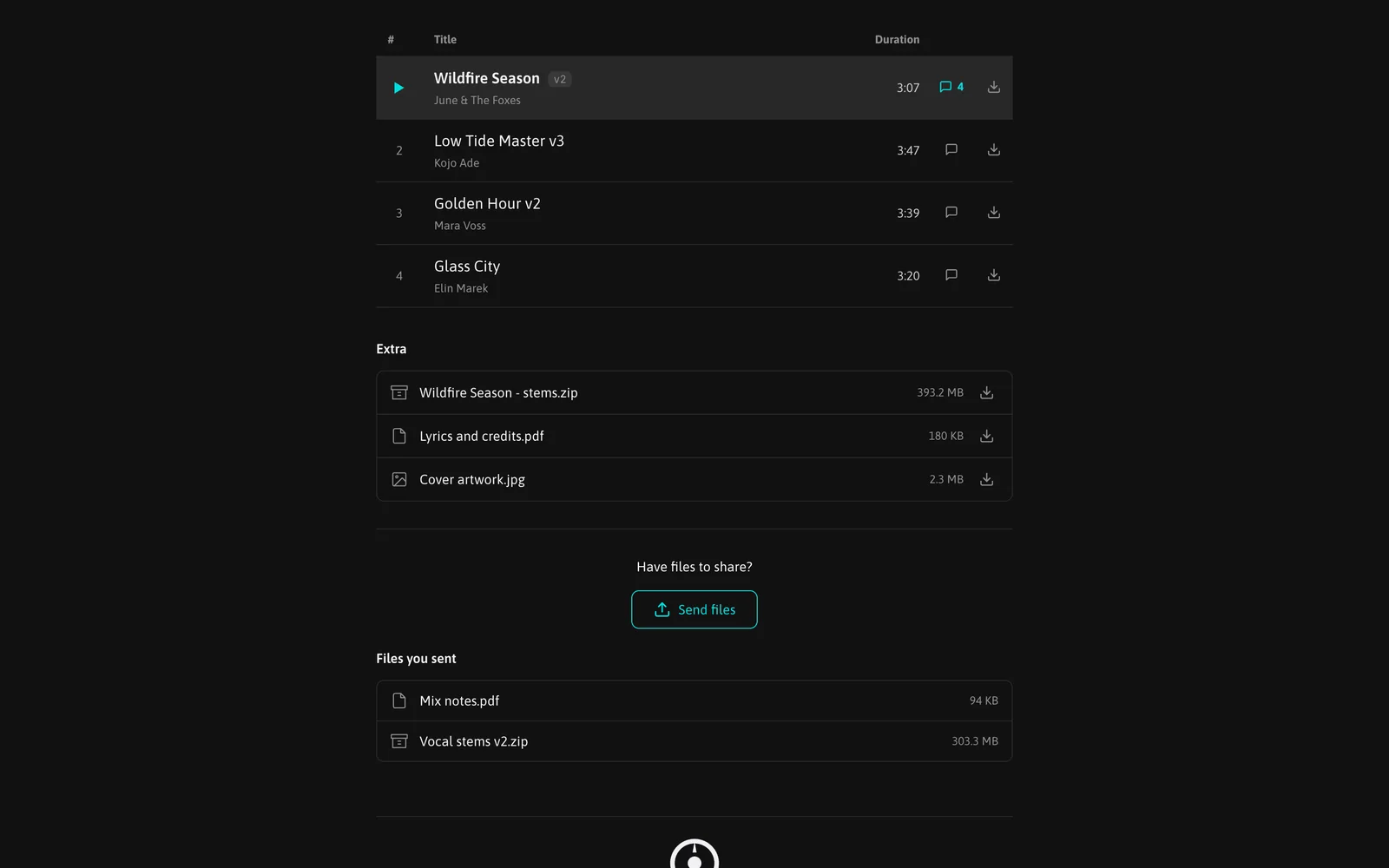 Listen analytics
How to Send Mixes to Clients for Feedback (Without the Chaos)
The mixing is the part you trained for; the delivery loop is where evenings disappear. One link per client, and the loop tightens itself.
Read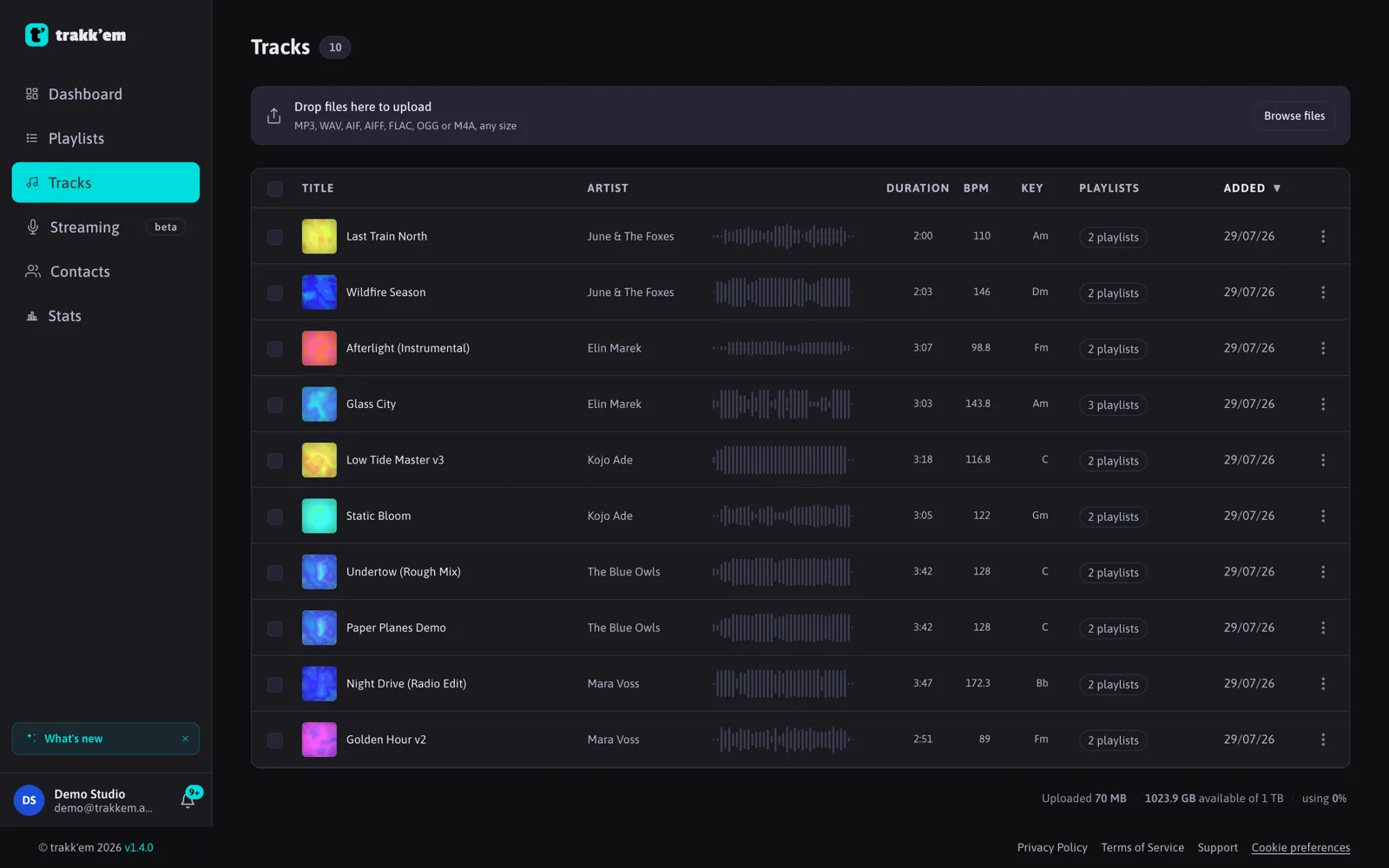 Sending music
The Best Way to Send Large Audio Files (for Musicians)
Email dies at 25MB, so you reach for a courier. But most music sends are not parcels: they are listens, and listens want a different tool.
Read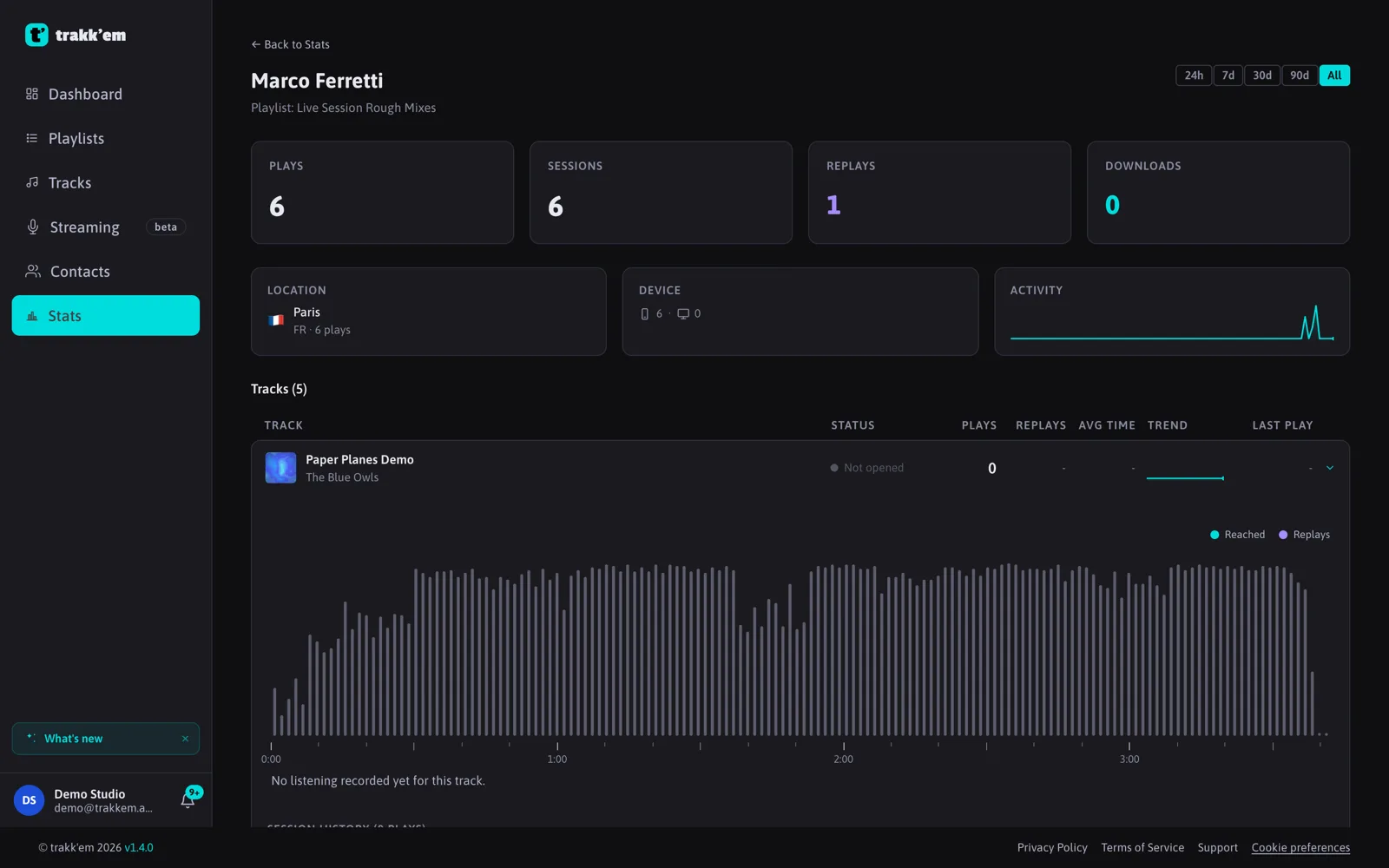 Sending music
How to Follow Up on a Demo Submission (Without Being Annoying)
A follow-up is a service to a busy person, not a reminder about you. Timing, templates, and knowing which of the four silences you are in.
Read Listen analytics
Read Receipts for Music: What They Are and Why They Matter
A text gets a tick, your track gets silence. What happens when the play itself becomes the receipt, with depth a checkmark cannot carry.
Read Sending music
Why You Should Stop Sending Demos via WeTransfer or Google Drive
They are great couriers, and a demo is not a parcel. Expired links, silent downloads, and the follow-up you cannot write without data.
Read Sending music
SoundCloud Private Links vs a Dedicated Demo Tool
The secret link works, but "3 plays" cannot tell the A&R from a forward. When public-platform plumbing is the wrong tool for a private pitch.
Read Sending music
How to Share Unreleased Music Privately (Without It Leaking)
Unlisted is not private, and a forwarded attachment is gone forever. The structural fix: one attributable private link per person.
Read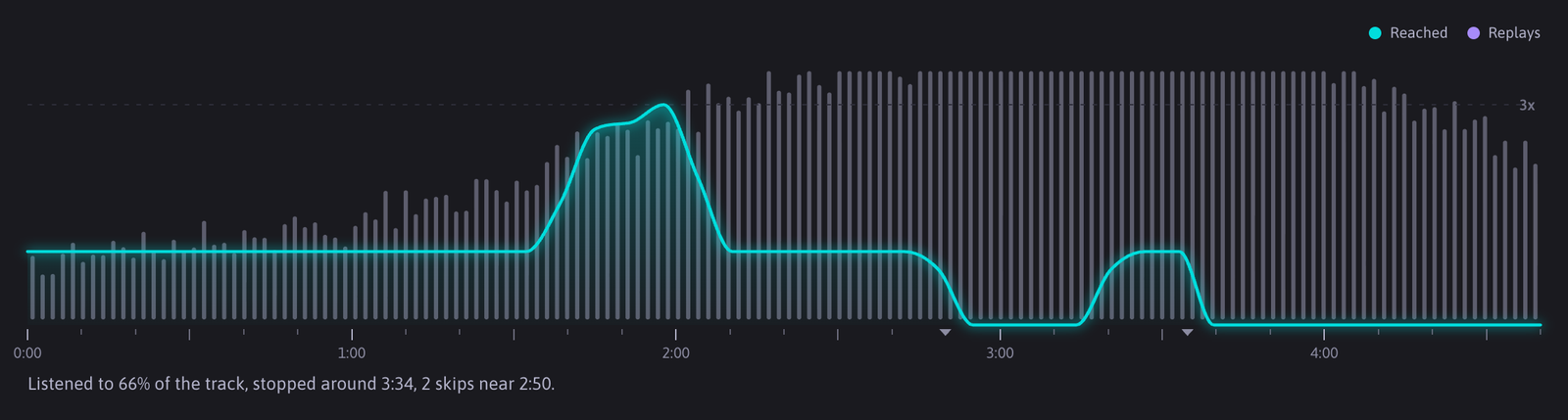 Listen analytics
Which Part of Your Song Makes People Skip (and How to Find Out)
Asking gets you "yeah it's cool". Behavior tells the truth: every rewind and skip, drawn over your waveform, per listener.
Read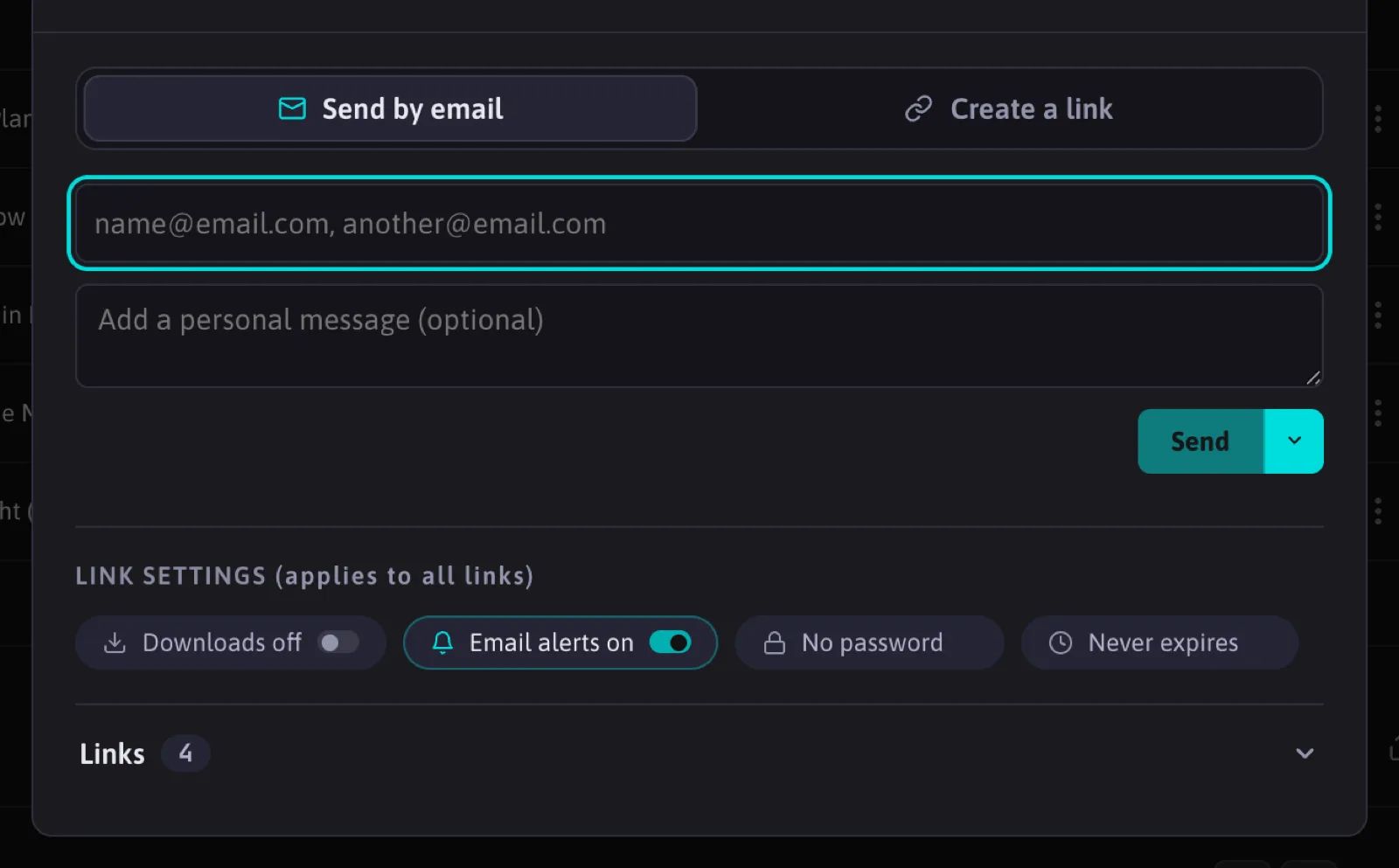 Sending music
What to Write in a Demo Submission Email (Template Included)
The A&R will give your email five seconds. Four sentences, one link, and a template you can steal. Everything else you are tempted to add hurts you.
Read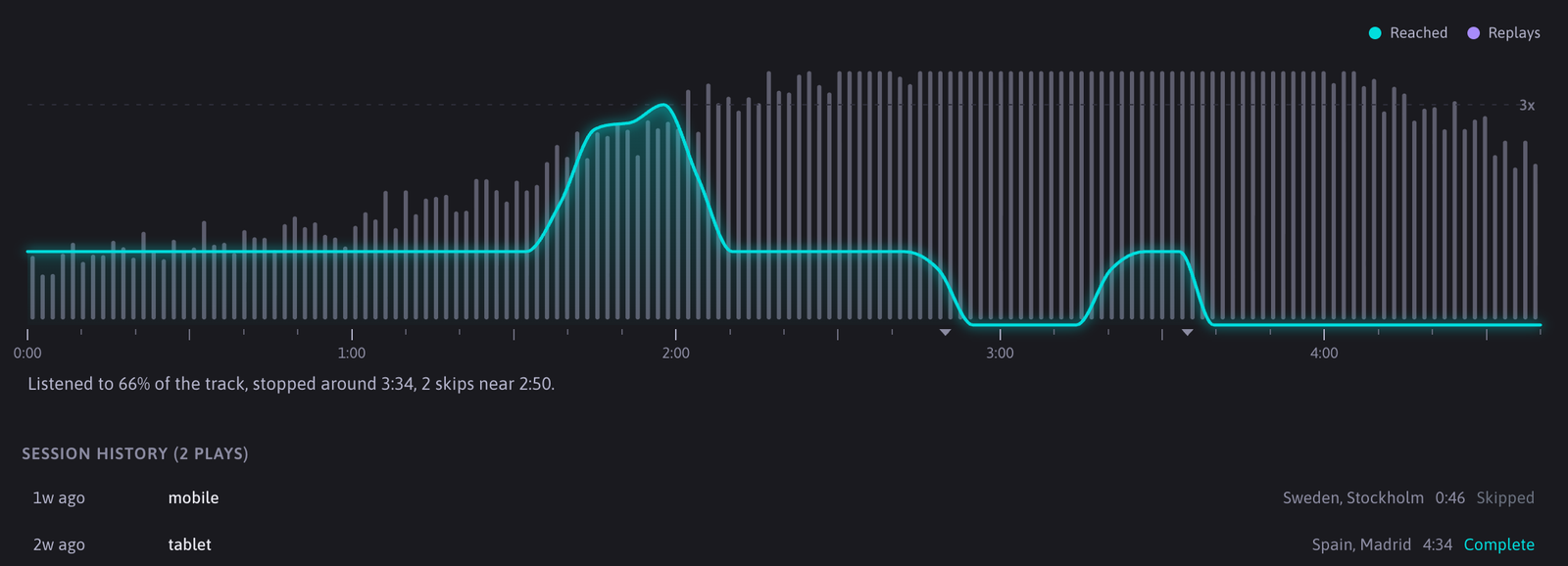 Listen analytics
Did the A&R Actually Open Your Demo? Here's How to Tell
Nine days of silence. Never opened, or played twice and being discussed? Those need opposite follow-ups, and here is how to tell them apart.
Read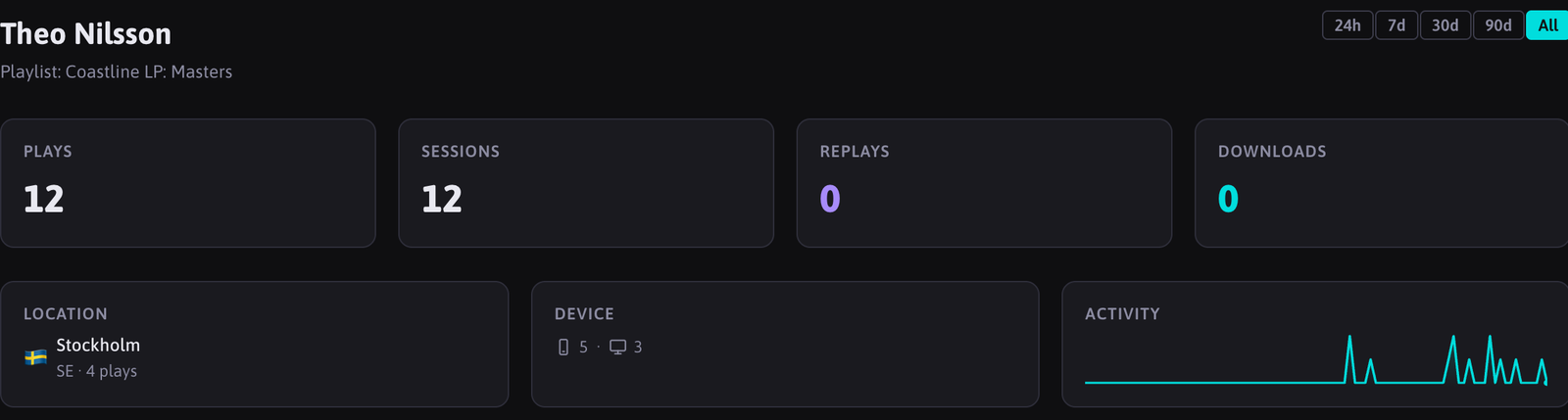 Sending music
How to Send a Demo to a Label (and Know If They Actually Listen)
Packaging, the email, where not to send it, and the part nobody talks about: knowing whether the label actually listened.
Read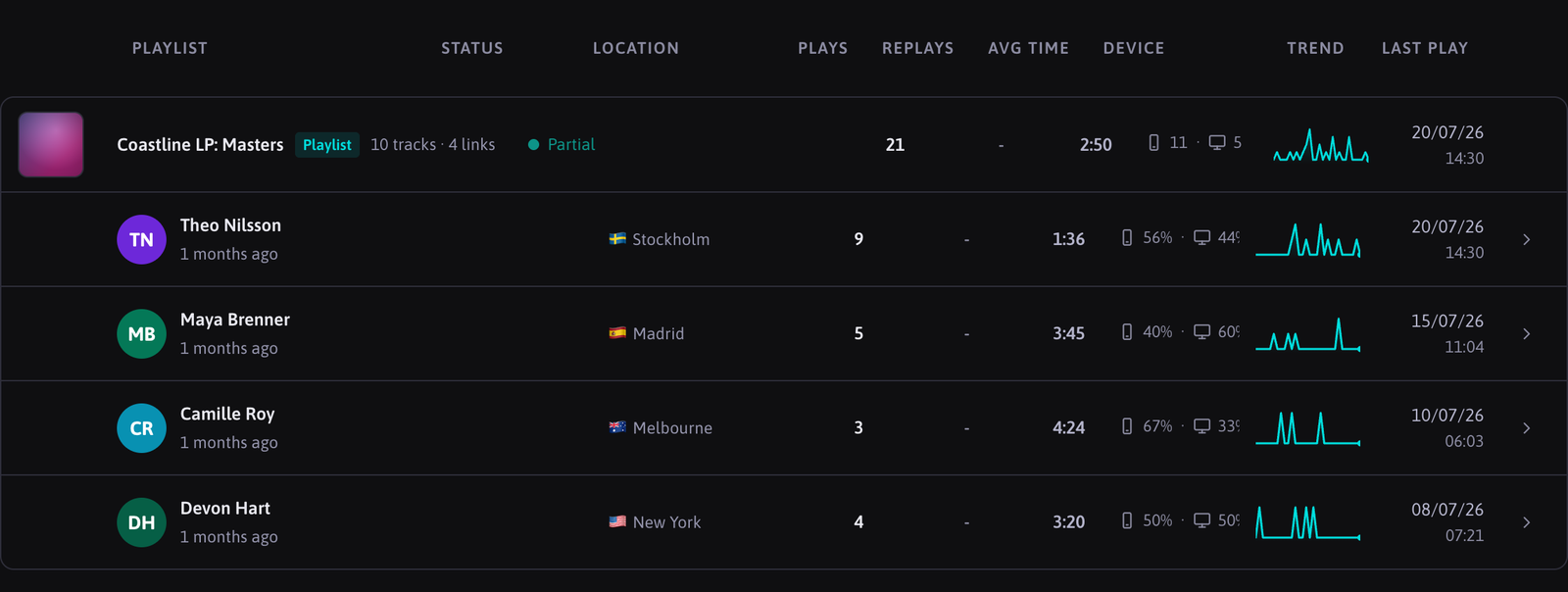 Listen analytics
How to Know If Someone Actually Listened to Your Music
You sent the track. Silence. Did they even open it? Here is how to actually know who listened, how much, and which part made them stop.
Read