
Unreleased music is the most fragile thing you own. The day before release it is an asset; leaked a month early it is a problem: premieres fall through, sync pitches lose exclusivity, and an algorithmic upload of your own track can even beat you to the platforms. Yet you have to share it: with labels, managers, collaborators, mix engineers, press. Every send is a small act of trust.
The good news: most leaks are not dramatic betrayals. They are sloppy plumbing: a public link that was "unlisted, so it's fine", a file forwarded once too often, a folder permission nobody remembered. Fix the plumbing and you fix most of the risk.
How unreleased tracks actually leak
- "Unlisted" public uploads. Unlisted is not private: anyone with the URL is in, the URL gets forwarded, and it can end up scraped or repost-ripped. You also just put your unreleased master through a public platform's re-encoder.
- One shared link for everyone. The moment ten people hold the same URL, the link tells you nothing about where a leak came from, and revoking it punishes everyone at once.
- Raw files sent as attachments. An attachment is a copy you no longer control, forever. Every inbox it lands in is a new potential source.
- Cloud folders with loose permissions. "Anyone with the link can view" plus one careless re-share, and your folder is public in practice.
Notice the common thread: in every case, you lose the ability to know who has the music and what they did with it.
The private-by-design way to share
The alternative is structural, and it is simple: every person gets their own private link to the same track.
This one change carries almost all the security:
- Nothing is ever public. There is no public page, no unlisted URL, no discoverable profile. The track exists only behind the links you mint.
- Every link is attributable. If a link circulates where it should not, you know exactly which one it was, because each link belongs to one named contact.
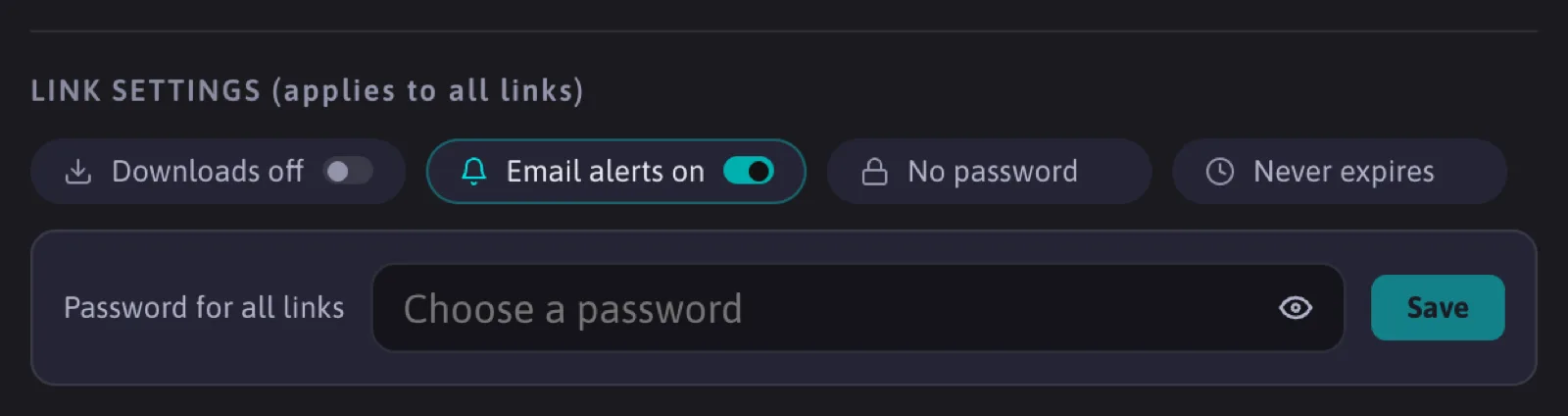
- Access is yours to shape. On trakk'em a link can carry an expiry date or a password when the situation calls for it, and downloads are off unless you decide otherwise: listeners stream, they do not automatically walk away with the file.
- The audio stays intact. The file is delivered as you exported it, not re-compressed by a platform built for public streaming.
Accountability changes behavior
Here is the quieter benefit. Because each link is personal and tracked, every listener knows the play is attached to their name. Not in a hostile way: in the same way a watermarked promo has worked for decades. People are simply more careful with something that is visibly theirs to be careful with.
And the same tracking that protects you also informs you: you see who opened the track, when, how much they played, even which sections they replayed. Protection and feedback turn out to be the same feature. The full picture is in how to know if someone actually listened to your music.
A sane checklist for pre-release sharing
- Never public, never unlisted. If a URL would work in an incognito window for a stranger, it is public.
- One link per person. Label, manager, mix engineer, PR: each gets their own. It costs seconds and buys attribution.
- Stream by default, download by decision. Give the file only to people who need the file (your mastering engineer, not a first-contact A&R).
- Use expiry and passwords where stakes are high. A sync pitch to a stranger deserves tighter settings than a link to your co-writer.
- Watch the plays. Unexpected patterns show up in the listening data before they show up as problems.
Sharing unreleased music will always involve trust. But trust with attribution, expiry, and a play-by-play record is a very different bet from a public URL and hope. Share the music, keep the control.
Ready to send something unreleased? See the plans and mint your first private link.