
The track is ready. The label is chosen. Now you are staring at an empty email, and everything you type sounds either desperate or fake. Here is the uncomfortable truth that should actually relax you: the A&R will spend about five seconds on your email. Its only job is to earn a click on the link. Not to sell your life story, not to prove you are professional, just to get one press of play.
That makes the email much easier to write. Short, specific, human. Here is the whole anatomy.
The subject line: say what it is
No tricks, no "quick question", no all-caps track title. A&Rs open demo emails knowing they are demo emails; pretending otherwise starts you on the wrong foot.
Formula: Demo: Artist Name - Track Title (genre).
That is it. It is scannable in an inbox of fifty, it is honest, and it survives being found again two weeks later when they finally have time to listen.
Line one: why this label
This is the only part that needs thought, and it is one sentence. Show that you chose them, not that you are carpet-bombing every contact you scraped.
"You put out [record they released] last year, and this track lives in the same world."
One specific reference to their catalogue does more than three paragraphs of enthusiasm. If you cannot write this sentence honestly, you may be sending to the wrong label, and that is worth knowing before you hit send.
Line two: what the music is
One sentence that sets expectations: genre, mood, one reference point.
"It's a 124bpm melodic techno track, darker than my earlier stuff, somewhere near [known artist] territory."
Do not review your own song. "Banger", "unique sound", "like nothing you've heard" are invisible words in an A&R inbox. Facts beat adjectives, because facts let them decide to listen.
Line three: the link
One link, clearly the thing to click, nothing competing with it. Not five attachments, not a folder, not three platforms "in case one doesn't work".
The kind of link matters more than people think:
- Not a raw attachment. Large files get stripped or bounced, and a
.wavin an inbox feels like homework. - Not a public upload. Your unreleased track on a public platform is, technically, released, and the audio gets re-compressed on the way.
- Not an expiring transfer link. If they open your email in ten days and the link is dead, that chance is gone and it looks careless.
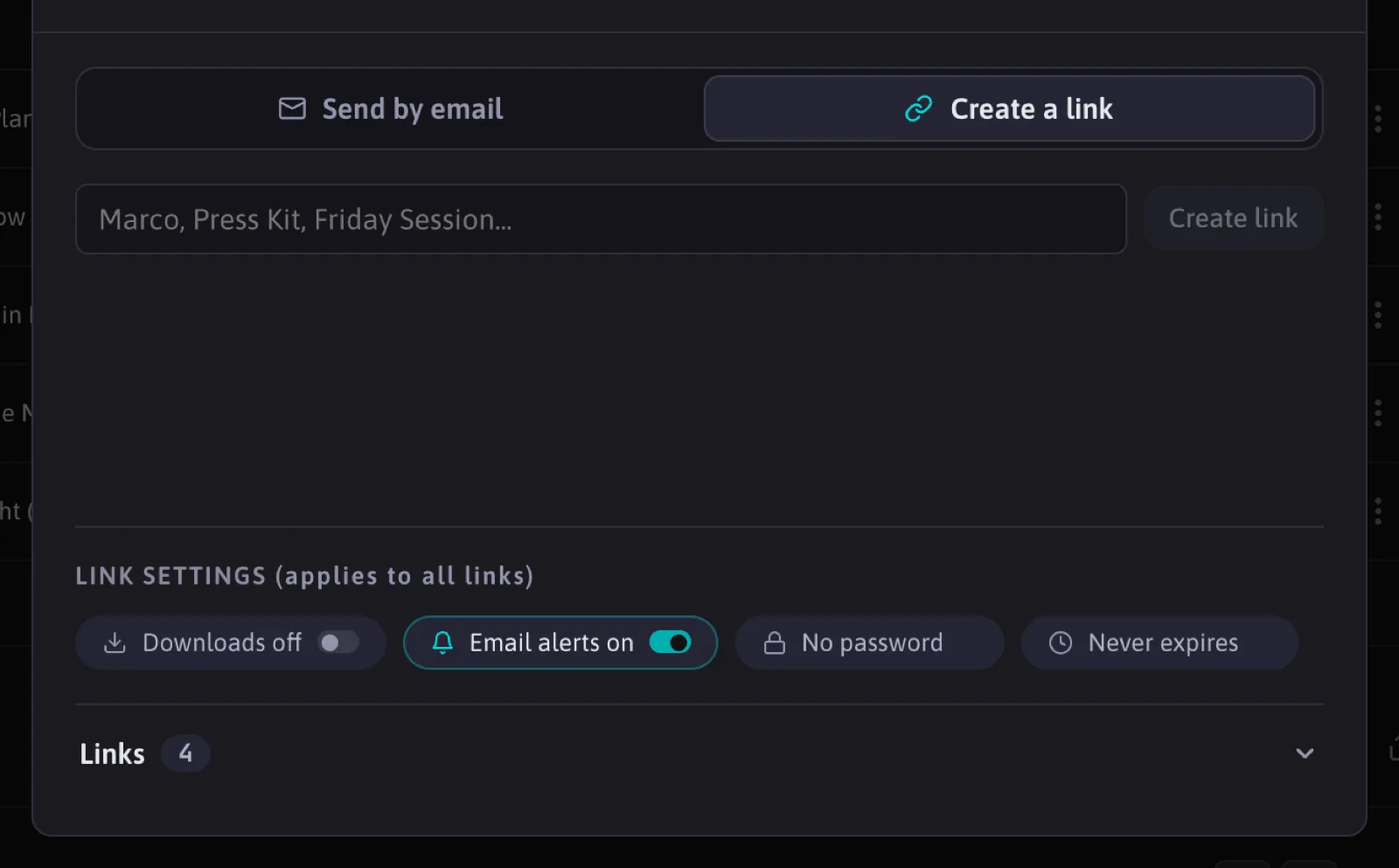
Send a private, per-contact link that streams instantly, keeps full quality, and does not expire. We go deeper on packaging in how to send a demo to a label.
The sign-off: leave the door open, then leave
One line, no pressure, no deadline, no "I'll follow up on Thursday".
"Would love to know what you think. Thanks for listening either way."
Then your name and, if you have one, a single link to where you exist online. Done.
The full template
Subject: Demo: Mara Vane - Undertow (melodic techno)
Hi [name],
You put out [record] last year and this track lives in the same world. It's a 124bpm melodic techno cut, darker than my earlier work, somewhere near [artist] territory.
Here's the track: [private link]
Would love to know what you think. Thanks for listening either way.
Mara
Four sentences. Every extra sentence you are tempted to add makes the click less likely, not more.
What NOT to write
- Your biography. They are signing a track, not a life. Achievements go in one link, not in prose.
- Apologies. "Sorry to bother you", "I know you get a lot of these". You are doing the thing the inbox exists for.
- Flattery inflation. One honest reference to their catalogue is respect. Three paragraphs is noise.
- Multiple tracks "so you can choose". Choosing is your job. Send your strongest one.
- Pressure. "Time-sensitive", "other labels are interested". If it is true, it will surface naturally later.
The part the email cannot do
Here is the catch with even a perfect email: after you send it, you are blind. Silence could mean "never opened", "opened and passed", or "listening to it right now". Each of those calls for a different follow-up, and a normal email cannot tell you which world you are in.
This is the quiet advantage of sending the demo on a tracked, per-listener link: you see whether it was opened, when, and how much of the track was actually heard, so your follow-up is informed instead of anxious. We wrote a whole piece on exactly that: did the A&R actually open your demo?
Write the four sentences, send the one link, and let the track do the rest of the talking.
Want the link to report back? See the plans or read how the listen tracking works.