
A finished WAV is a big file. A 24-bit master runs hundreds of megabytes; a batch of stems can cross into gigabytes. Email dies at 25MB, so every musician eventually types the same search: best way to send large audio files. The usual answers: WeTransfer, Dropbox, Drive, are all correct, and all answering a narrower question than the one you are actually asking.
Because "send" hides two very different jobs, and the best tool depends entirely on which one you are doing.
Job 1: deliver the bytes
Sometimes the file itself is the deliverable. Stems to a mix engineer. The approved master to the label. Session folders to a collaborator. The recipient needs the file on their disk, and the transfer is the whole transaction.
For this job, the couriers are genuinely good, with known trade-offs:
- WeTransfer: dead simple, no account needed on either side; links expire in days on the free tier, so time-sensitive handoffs only.
- Dropbox / Drive: persistent and organized; you manage quotas and permissions, and "anyone with the link" is a setting to watch with unreleased material.
- A direct transfer service for very large sessions, if both sides are technical.
If this is your job, pick by expiry and quota and move on. The rest of this article is about the other job, the one the couriers quietly fail at.
Job 2: deliver the listen
Most of the time a musician "sends a large audio file", the file is not the point. The demo to a label, the new track to a manager, the mix to a client: nobody needs those bytes on a disk. They need to hear it, and you need to know what happened. The file is just the vehicle.
Couriers fail this job on every axis that matters:
- The experience: a download screen or a file list, then a generic player, no artwork, no context. Your track deserves a better front door than a progress bar.
- The quality: if the recipient instead plays it through some platform's preview, the audio often gets re-encoded on the way. The whole reason you exported a large file was that quality.
- The signal: a completed download tells you nothing. Downloaded is not played, and played is not heard. We took this failure apart in why you should stop sending demos via WeTransfer or Google Drive.
- The control: an attachment or downloaded file is a copy in the wild, forever: a real concern when the music is unreleased.
The listening-first way to send
For job 2, flip the model: instead of moving the file to the person, give the person a private streaming link to the file, one link per listener.
This is how trakk'em handles it, and file size stops being a topic entirely:
- No size anxiety. Upload the full-quality file once: your WAV streams as exported, never transcoded. The listener presses play in the browser; nothing to download, nothing to expire.
- A real front door. The listener lands on a clean player with artwork and your description: a prepared delivery, not a file dump.
- The link stays alive. Opened two weeks later on a train, it still plays.
- You see what happened. Who opened it, when, how much they heard, which sections they replayed: the entire feedback layer a courier cannot give you.
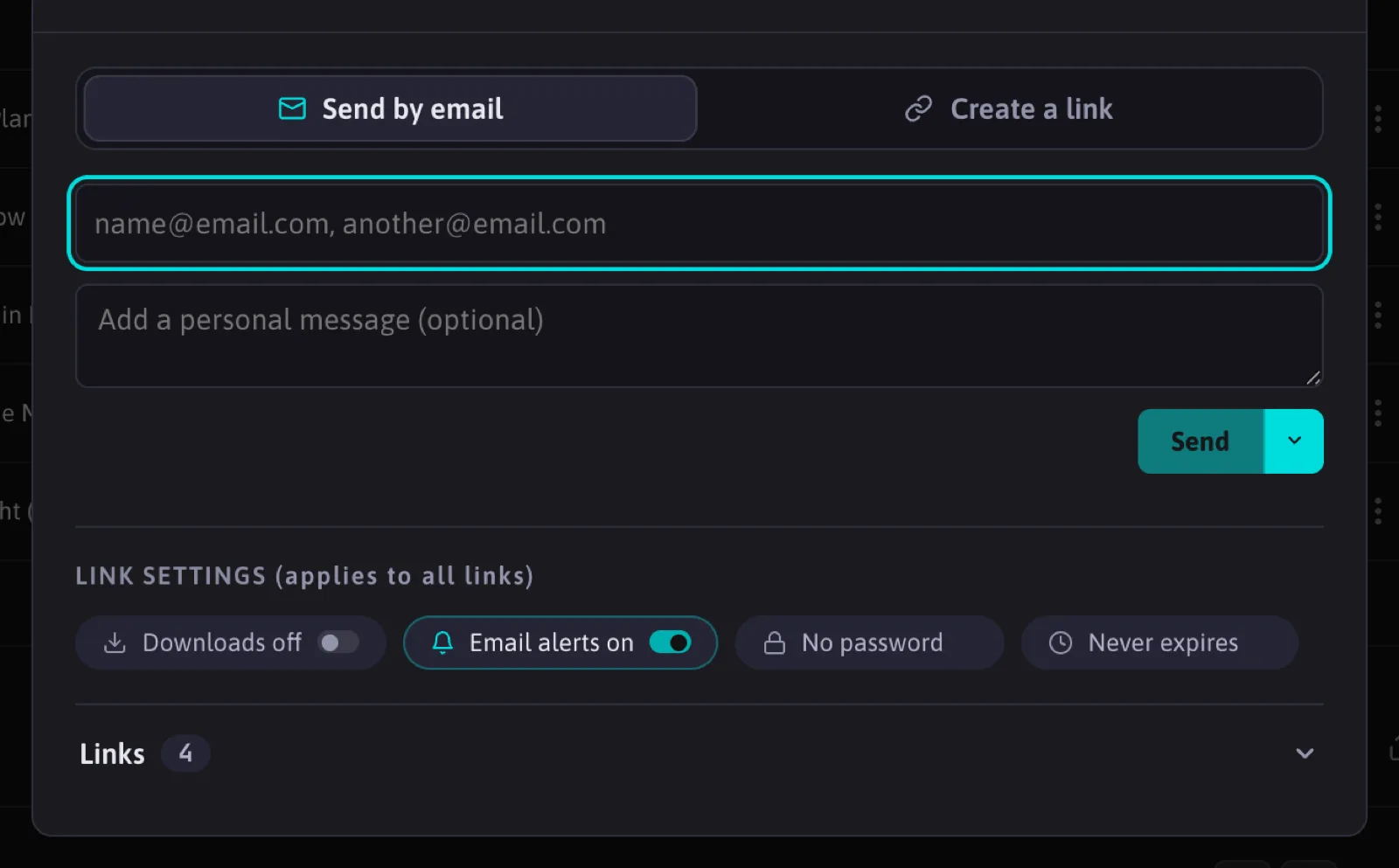
- The file moves only if you say so. Downloads are off by default and per-link when you enable them: your mastering engineer gets the file, the first-contact A&R gets the listen.
The one-line rule
If the recipient needs the file, use a courier. If the recipient needs to hear the music, send a private streaming link, and get the story of what happened next.
Most sends in a music career are the second kind, including the ones that decide it: pitches, demos, client mixes. Treat them as listens, not parcels, and the "large file problem" turns out never to have been about size at all.
Sending something that matters? See the plans and deliver the listen, not the bytes.