
Sending a demo to a label sounds simple: attach the track, write a line, hit send. Then you wait, and the waiting is where most demos quietly die. Not because the music was wrong, but because the send was. The wrong file format, the wrong link, a message that read like spam, and no way of telling whether anyone even opened it.
This is a practical guide to doing it properly: how to package the demo, what to write, where not to send it, and the part almost nobody thinks about until it is too late, knowing whether the label actually pressed play.
Before you send: is it actually ready?
A label listens to the first fifteen seconds and decides. That is not cynicism, it is triage: an A&R may get dozens of demos a week. So the honest question is not "is this song good", it is "does the first fifteen seconds make someone want the next fifteen".
- Lead with your strongest track. One, maybe two. A ten-song dump signals you could not decide, and nobody clears an hour for a stranger.
- Get the intro right. If your best hook is at 1:10, most listeners will never reach it. Consider whether the demo version should get there sooner.
- Export at full quality. Send a proper file, not a re-compressed export of an export. If a platform re-encodes your audio, the label hears a worse version than you made.
Package it like someone who has done this before
The format you send in quietly tells the label how serious you are.
- One clearly named file.
Artist - Track (2026).wavor a high-quality MP3, notfinal_final_v3_MASTER.wav. - A private link, not a public post. You are pitching, not releasing. A private link keeps the track unlisted and lets you send a specific person a specific link, instead of one public URL floating around.
- Everything in one place. If there is a one-line bio or a lyric sheet, attach it to the same delivery so the A&R is not hunting through a thread.
Where not to send it
Some of the most common ways to send a demo are also the ways most likely to get it ignored or lost.
- A raw email attachment. Large files bounce or get stripped, and a
.wavin an inbox feels like homework. Worse, you learn nothing about what happened to it. - A public streaming upload. Uploading your unreleased track to a public platform to share the link means it is now, technically, out. It also re-compresses your audio, and gives you a play count for the whole world, not for the one A&R you care about.
- A file-transfer link that expires. If the label opens your email in ten days and the link is dead, that is a lost chance, and it looks careless.
The pattern behind all three: they treat delivery as "move the bytes and hope". A demo deserves a link that is private, does not expire on you, and tells you what happened next.
What to write in the message
Short, specific, human. The A&R is deciding in seconds whether to press play.
- Say why them. One line that shows you know the label, not a mail-merge. "You put out X, this sits next to it" beats "Dear Sir/Madam".
- One sentence on the music. Genre, mood, a reference point. Enough to set expectations, not a paragraph of adjectives.
- Make the link obvious. One link, clearly the thing to click. No five attachments and a maze.
- No pressure, no life story. Respect their time and they are more likely to give you theirs.
The part nobody talks about: did they actually listen?
Here is the gap that makes sending demos so frustrating. You do everything right, and then, silence. Was it heard and passed on? Was it never opened? A raw file or a public link cannot tell you, so you are left guessing, and guessing leads to the worst move of all: the anxious follow-up to someone who genuinely never saw it.
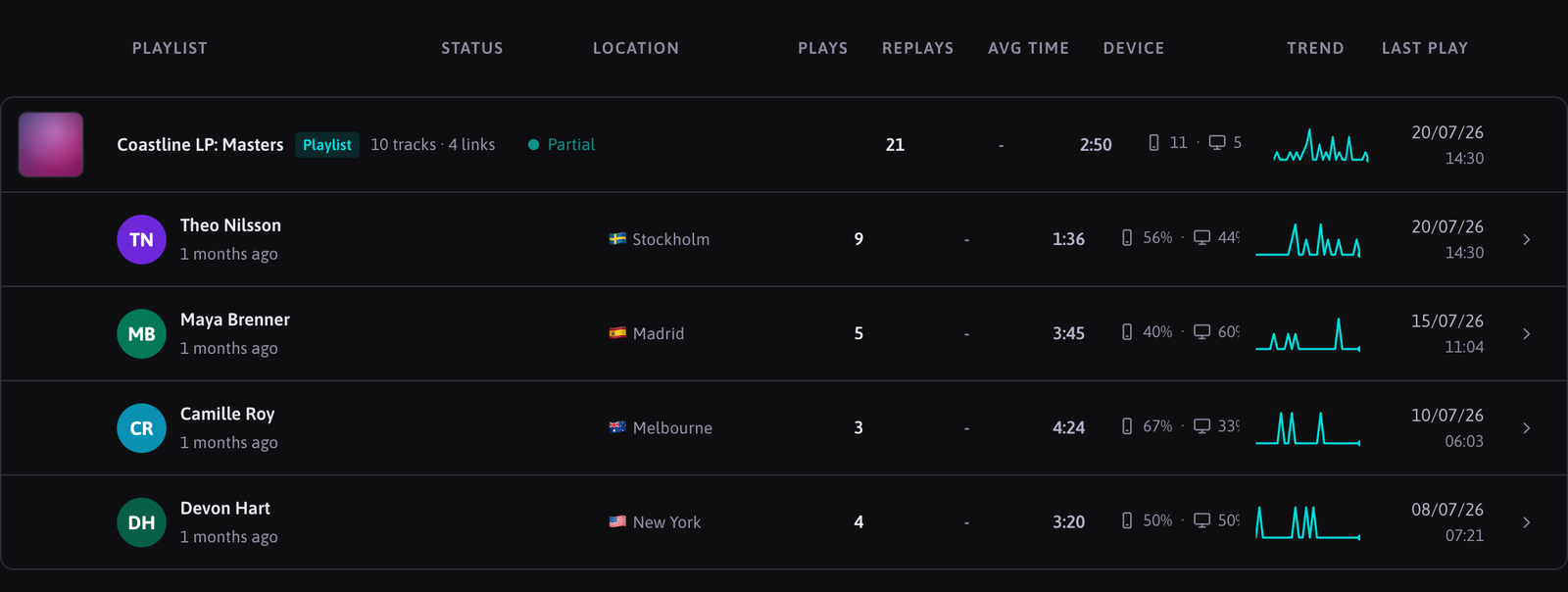
This is the whole reason to send a demo on a tracked, per-listener link. When each label or A&R gets their own private link, the send stops being a black box:
- You see whether they opened it, and when.
- You see how much they heard, so you know the difference between "passed after ten seconds" and "played it twice, all the way through".
- You even see it live, the moment someone is inside your track.
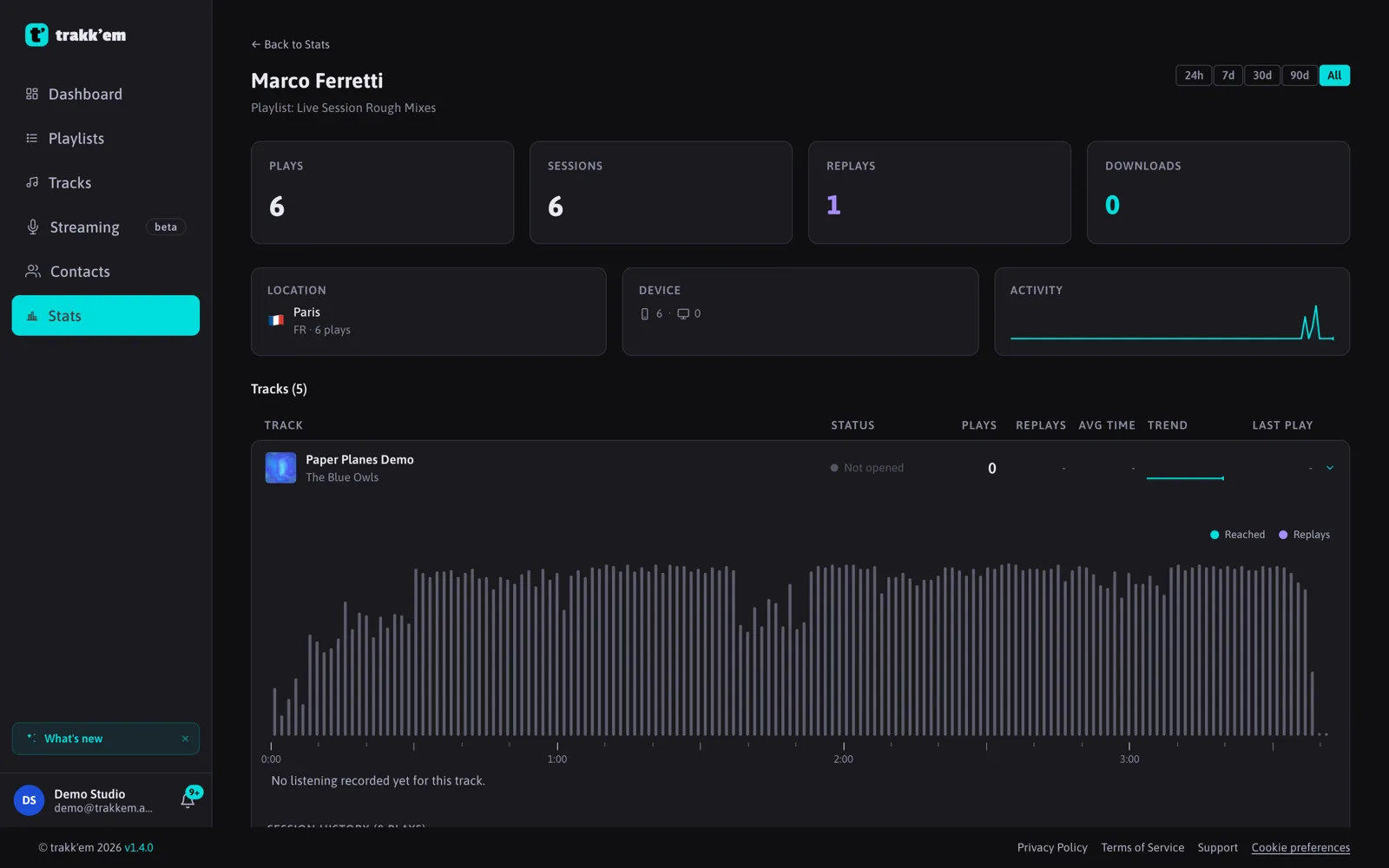
That changes how you follow up. If the link shows they never opened it, a gentle nudge makes sense. If it shows they listened to the whole thing and passed, you have a real answer and you move on, instead of chasing a maybe for weeks. We go deeper on this in how to know if someone actually listened to your music.
A simple checklist
- One or two strongest tracks, full quality, intro that earns the next fifteen seconds.
- A clearly named file on a private, per-contact link that will not expire, not a public upload or a raw attachment.
- A short, specific message that says why this label and what the music is.
- A tracked link, so you know whether they actually listened and can follow up like a professional instead of guessing.
Do those four and you have done your part properly. The rest is the music, which is exactly where your energy should have been all along.
Want to send demos you can actually track? See the plans or read how the listen tracking works.