
You did everything right. Strongest track, clean file, short message, sent to the right person at the right label. That was nine days ago. Since then: nothing.
Now you are stuck in the worst loop in music. Follow up too soon and you look pushy. Wait too long and the moment passes. And underneath both fears sits the one question you cannot answer: did they even open it?
This article is about actually answering that question, instead of decoding silence.
Why silence tells you nothing
An A&R inbox is a triage line. Dozens of demos a week, most opened late at night or between meetings, many never opened at all. Silence after a demo can mean any of these:
- They never saw the email.
- They saw it, meant to listen, and it slid down the pile.
- They listened to ten seconds and moved on.
- They listened to the whole thing twice and are deciding what to do.
Those four situations call for four completely different moves from you. The first deserves a nudge. The second deserves patience. The third is a "no" you should accept gracefully. The fourth is the one where a clumsy follow-up can actually hurt you. But from the outside, all four look identical: silence.
The old tricks do not work
People have tried to hack this problem for years, and every workaround leaks.
- Email read receipts tell you the email was opened, not the track. An opened email with an unplayed demo is still an unplayed demo.
- Tracking pixels in the message are blocked by most mail clients now, and at best they answer the same wrong question.
- Download counts on file-transfer links count downloads, not listens. A&Rs download batches of demos and play a fraction of them.
- Public platform play counts mix the A&R in with everyone else. Three plays could be the label, or your friends.
Every one of these measures activity around the music. None of them measures the only event that matters: your track, playing, in front of the person you sent it to.
The answer: give the A&R their own link
The fix is structural, not a trick. Instead of an attachment or a shared URL, you send the A&R a private link that belongs to them alone. One link, one listener. Because nobody else has that link, everything that happens on it is, by definition, them.
The moment they press play, you know. Not from a reply, not from a receipt, but from the play itself.
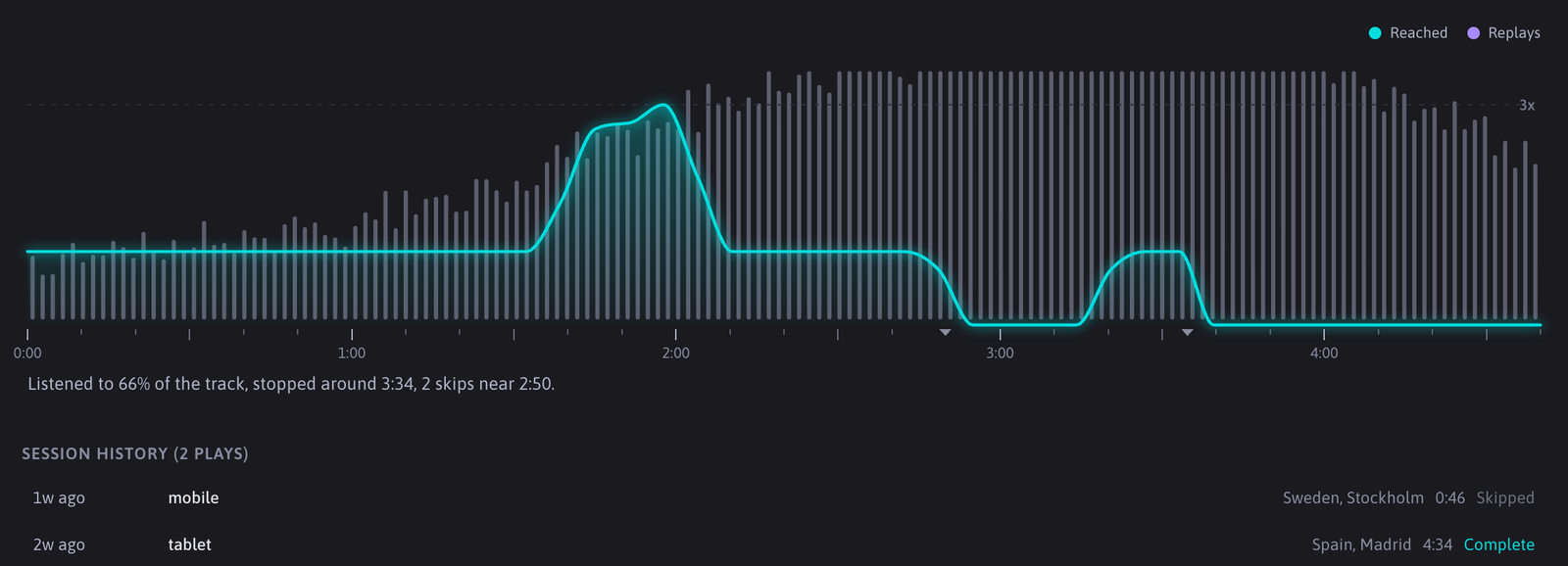
This is the model trakk'em is built around, and per listener it tells you:
- Whether they opened it, and when. The 11:40pm play on a Tuesday is a real event with a timestamp, not a guess.
- How far they got. Fifteen seconds is triage. The full track is interest. The full track twice is something else.
- Where they stopped or replayed. If they bailed at the bridge or rewound the drop, you know which part of the song did the talking.
- Live, as it happens. There is a "playing now" state, so you can literally watch the moment your demo is being heard.
We cover the full picture of what per-listener tracking can tell you in how to know if someone actually listened to your music.
How this changes your follow-up
Here is the practical payoff. With a tracked link, the four identical silences become four different situations with four obvious moves:
- Never opened. After a week or so, a short, friendly nudge is completely fair, and you can send it with confidence instead of anxiety. They genuinely have not seen it.
- Opened, stopped early. That is an answer. Do not chase it. Take the data instead: where did they stop? That is free A&R feedback on the track itself.
- Opened, played through once. Give it a few days. Interest exists; pressure kills it.
- Played through more than once. Now a follow-up is not a nudge, it is a conversation starter, and you get to time it while you are actually on their mind.
The difference is not just information. It is that you stop behaving like someone guessing in the dark, and labels can feel the difference between the two.
One honest caveat
A play is a signal, not a verdict. A&Rs skim on phones, get interrupted, come back days later. Read patterns over days, not single pings, and weight how much they heard over how many times they clicked. The point of tracking is not to surveil one moment; it is to replace imagined rejection with real information.
Silence is data only when you have the instruments to read it. Send your next demo on a link that reports back, and you will never again draft a follow-up to someone who, it turns out, never pressed play.
Want to see it for yourself? See the plans and send your next demo on a tracked link.